
The southwest monsoon arrived in Maharashtra on Sunday, making it the earliest onset of the annual rainfall season over the state in 35 years, according to the India Meteorological Department. The monsoon is expected to advance to Mumbai and some other parts over the next three days. The monsoon advanced into some more parts of the Arabian Sea, Karnataka, entire Goa, parts of Maharashtra, north Bay of Bengal, and parts of Mizoram, parts of Manipur and Nagaland on Sunday. The northern limit of monsoon passes through Devgad, Belagavi, Haveri, Mandya, Dharmapuri, Chennai, Aizawl and Kohima. Conditions are favorable for further advance into some more parts of central Arabian Sea, more parts of Maharashtra including Mumbai, Karnataka including Bengaluru, some parts of Andhra Pradesh, remaining parts of Tamil Nadu, more parts of west-central and North Bay of Bengal and some more parts of North Eastern states during next three days. The southwest monsoon hit Kerala on Saturday, marking its earliest arrival over the Indian mainland since 2009.

The India Meteorological Department (IMD) has predicted that the June-September southwest monsoon seasonal rainfall over India is expected to be 90 per cent of the long-period average. While the Northeast is likely to witness normal rainfall, the remaining parts of the country may see below normal rainfall.

The onset of the southwest monsoon is being keenly watched this year as it may provide an early sign regarding its progress over the Indian subcontinent, particularly when El Nio is expected to rear its head during the latter half of the season.

Climate experts explain how El Nino and climate change are intricately linked, with El Nino delaying monsoon onset and climate change intensifying rainfall. This new reality is altering the Indian monsoon's behaviour, leading to short-duration, high-intensity rain spells, especially in western and northwestern regions.

'This system will be of immense help in agricultural planning, disaster management and water resources management.'

The India Meteorological Department (IMD) has forecasted an early onset of the southwest monsoon over Kerala, expected around May 26. This marks the beginning of the crucial rainy season for India.
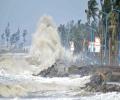
The India Meteorological Department (IMD) has announced that conditions are becoming favourable for the onset of the southwest monsoon over parts of the south Bay of Bengal, Andaman Sea, and Andaman and Nicobar Islands towards the end of this week.

After a subdued start, the southwest monsoon has gathered pace since the beginning of July, narrowing the cumulative rainfall deficit from nearly 30 per cent on June 30 to around 15 per cent as of July 8.

Torrential monsoon rains unleashed widespread destruction across several parts of the country on Thursday, inundating roads, uprooting trees, damaging property and disrupting normal life as authorities scrambled to restore normalcy.

The India Meteorological Department forecasts the southwest monsoon to arrive in Kerala in the next two to three days, slightly delayed from the typical June 1 start. The department also predicts below-normal rainfall for the season due to emerging El Nino conditions.

The IMD, in its onset date forecast on May 15, had said the monsoon is likely to hit the southern state on June 5, four days after its normal arrival.

The India Meteorological Department has issued a red alert for Mumbai, Thane, Palghar, and Raigad districts for Saturday and Sunday, forecasting extremely heavy rainfall. Mumbai has already experienced significant rainfall this week, and the alert indicates continued severe weather conditions, potentially disrupting normal life.

The Centre has reviewed the monsoon situation, noting a reduced rainfall deficit and ongoing preparedness for the kharif season amidst El Nino concerns. A high-level meeting chaired by the Principal Secretary to the Prime Minister discussed measures across various sectors, emphasising continuous monitoring and coordinated action to mitigate potential impacts on agriculture, water resources, and essential commodities.

Cyclone 'Biparjoy', the first storm brewing in the Arabian Sea this year, has rapidly intensified into a severe cyclonic storm, with meteorologists predicting a 'mild' monsoon onset over Kerala and 'weak' progress beyond southern peninsular under its influence.

Mumbai experienced heavy overnight monsoon rains, with some areas receiving over 200 mm in 24 hours, leading to widespread waterlogging, traffic congestion, and disruptions in suburban train services, particularly on Central Railway lines due to a track cave-in.

Sowing of winter rice and oilseeds has started along with the progress of the monsoon over India's southern and northeastern regions, the agriculture ministry said on Thursday.\n\n\n\n

The monsoon onset over Kerala marks the commencement of the four-month rainfall season in the country.

The southwest monsoon has arrived in Mumbai 16 days before its usual date, making it the earliest arrival since 1950. This early onset follows the monsoon's arrival in Kerala, the southernmost state, on Saturday, marking the earliest arrival since 2009. The India Meteorological Department (IMD) predicts an above-normal rainfall for the 2025 monsoon season, with rainfall between 96 per cent and 104 per cent of the 50-year average of 87 cm considered 'normal'. The monsoon is crucial for India's economy, providing vital water for agriculture and replenishing reservoirs.

Dabur India's stock has fallen over 17 per cent since the start of the Iran war, driven by concerns over a weak monsoon, the West Asian crisis, and rising input costs, which are expected to impact the company's revenues and margins, particularly affecting its significant rural sales and international markets.

The India Meteorological Department (IMD) forecasts the withdrawal of the southwest monsoon from northwest India around September 15. This year's monsoon covered the country earlier than usual, resulting in surplus rainfall and extreme weather events.

Spurred by cyclone Remal, the southwest monsoon set in over the Kerala coast and parts of the northeast on Thursday, a day earlier than forecast by the weather office.

This would be due to early monsoon onset, abundant precipitation in the soil and the government's higher minimum support price (MSP) for farmers, the USDA said in its assessment.
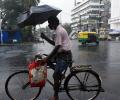
The Southwest Monsoon is set to arrive early with the Andaman and Nicobar Islands expected to receive first seasonal showers on May 15, the weather office said on Thursday.

The last time the southwest monsoon arrived earlier than in 2025 -- that is, back in 2009 -- the rains lost steam after the early onset and ended the season with almost 23 per cent deficient rainfall, which was the lowest recorded average rainfall in several decades over India.

Scientists had earlier said the cyclone pulled the moisture and convection, impacting the intensity of the monsoon and delaying its onset over Kerala.

On May 15, the weather office had announced the onset of monsoon over Kerala by May 31.

The India Meteorological Department (IMD) has predicted above-normal rainfall across India in June, with most parts of the country likely to experience normal to below-normal maximum temperatures. The IMD also anticipates above-normal minimum temperatures across most of the country, except for some parts of central India and the adjoining south peninsula. The southwest monsoon reached Kerala on May 24, marking its earliest arrival over the Indian mainland since 2009. The monsoon is crucial for India's agriculture-dependent economy, providing vital water for crops and supporting drinking water and hydropower generation.
Weather scientists attribute the early onset of southwest monsoon over Kerala to the influence of the remnants of cyclone Asani that triggered the cross-equatorial flow, a key factor for the seasonal rains.

Normally, the southwest monsoon makes its onset over Kerala by June 1 and covers the entire country by July 8. It starts retreating from northwest India around September 17 and withdraws completely by October 15.

The labourers, who are said to be of Nepali origin, were engaged in the construction of a hotel.

Conditions were becoming favourable for further advance of the southwest monsoon over some more parts of the south peninsula and east India and adjoining areas between June 18 and 21.

Releasing the first advanced estimate, Union Agriculture Minister Shivraj Singh Chouhan said that though excessive rainfall affected crops in some areas of the country, most parts have benefited significantly from a good monsoon, leading to overall good crop growth.

The central and western parts of India, which form the core monsoon zone, may face challenges in coping with the drying effects due to inadequate rainfall early in the season, Skymet Weather said.

June 1 is the official onset date of monsoon in India when it hits Kerala.

Maharashtra Deputy Chief Minister Eknath Shinde on Monday attributed early arrival of the southwest monsoon and heavy rainfall in a short span for the inundation of low-lying areas in Mumbai, which disrupted road and railway traffic.
"This year, the Southwest Monsoon is likely to set over Kerala on May 31 with a model error of four days," the India meteorological department said on Wednesday.

IMD Director General M Mohapatra said there is cyclonic circulation along the Karnataka coast which is hindering the progress of the southwest monsoon.
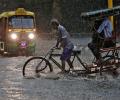
Conditions are becoming favourable for advance of southwest monsoon over the southern part of Andaman Sea, Nicobar Islands and adjoining southeast Bay of Bengal during May 18-19, the IMD said.

The rains after arriving over Kerala will quickly cover Tamil Nadu and Karnataka, but then might slacken a bit, which could delay its arrival over Northwest India.

Incessant rains and flooding have caused widespread disruption in northern India, with states like Himachal Pradesh, Delhi, Punjab, and Jammu and Kashmir facing landslides, road closures, and displacement. Rescue efforts are underway as authorities grapple with the aftermath of the deluge.
